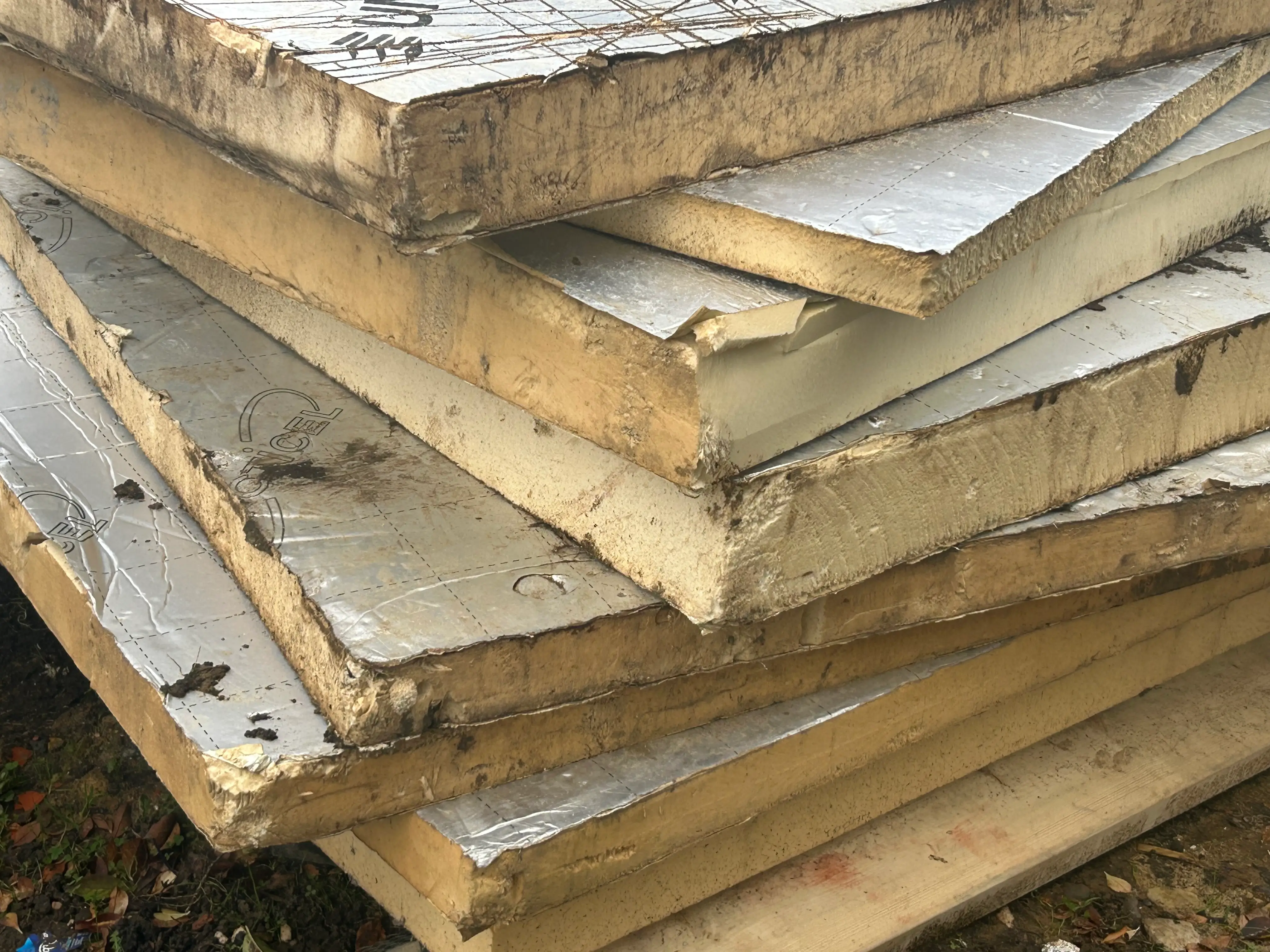
Careful Loft Insulation Removal for Chingford Properties
Professional Removal of Old Loft Insulation Layers
Controlled Extraction • Clean Removal • Loft Prepared for Upgrade
Professional Removal of Old Loft Insulation Layers
Controlled Extraction • Clean Removal • Loft Prepared for Upgrade
In a lot of Chingford lofts, insulation has been in place for years without being checked. Over time, factors like damp, airflow issues or general wear can leave it in a condition where adding more insulation isn’t the right solution.
In properties where insulation has been left untouched for many years, dust build-up and gradual material breakdown can also affect performance. As the fibres settle and lose their structure, the insulation layer becomes thinner and less capable of trapping the air pockets that slow heat loss through the roof.
When insulation shows signs like these, simply adding more material on top rarely improves the situation. Removing the affected insulation allows the loft space to be cleared properly so moisture, contamination or airflow problems can be addressed before any new insulation is installed.
We examine how the insulation has been installed and whether it has shifted, degraded or become contaminated over time.
We use a structured removal approach to ensure the loft is cleared thoroughly while keeping disruption to the property minimal.
Once removed, the loft is cleared of remaining debris and left clean, allowing for proper inspection or future insulation work to be carried out safely.
If your insulation doesn’t require full removal, you may be better suited to a lighter upgrade instead.
View our Loft Insulation Top-Up Service
Long-standing loft insulation can contain more than just thermal material, often holding dust and airborne particles gathered over time. Removing it without controlled methods can allow those particles to circulate through the property.
As Chingford Loft Insulation specialists, we carry out removal using controlled methods designed to protect your home during the process. Particular care is taken around loft access points and surrounding areas to keep disruption to a minimum.
Taking insulation out of a loft creates the opportunity to properly examine the roof space itself. Once older insulation layers are removed, it becomes much easier to spot signs of moisture build-up, airflow restrictions or areas where insulation has deteriorated due to age or previous installation problems.
Many Chingford Loft Insulation removal projects begin with ventilation problems inside the loft space. When airflow around the eaves becomes restricted, warm air rising from the home can meet cooler roof surfaces and create condensation that gradually affects the insulation layer below.
Insulation materials such as mineral wool and fibreglass depend on their structure to retain heat. Once the fibres become flattened or disturbed, the insulation loses the air pockets that create its thermal resistance.
Once insulation that is no longer performing correctly has been cleared, the loft space becomes easier to inspect. This helps ensure any new insulation installed in the future performs properly rather than covering hidden problems.
Loft insulation removal in Chingford often varies more by property layout than by the insulation itself. Some lofts have been boarded over multiple times over the years, while others have older pipework, low roof pitches or limited crawl space that changes how the removal needs to be carried out.
In older terraces and semi-detached properties around Chingford, we regularly come across insulation compressed beneath stored items or trapped behind later alterations inside the loft. In those situations, the job usually requires slower section-by-section extraction rather than clearing large areas all at once.
Access can also affect how the work is planned. Narrow loft hatches, fixed ladder positions and restricted landing space sometimes mean removal materials need to be handled differently to keep the property protected while the loft is being cleared.
Some Chingford loft insulation removal projects also involve working around previous DIY boarding or older insulation layers that have been topped up several times without the original material ever being removed. Once layers begin mixing together, it becomes harder to assess what condition the lower insulation is actually in until the loft has been cleared properly.
We also see lofts where older insulation has shifted towards the eaves over time, reducing airflow around the roof edges. In these situations, removal is often the only practical way to expose the affected areas fully and prepare the loft correctly before any replacement insulation goes back in.
Where insulation has been sitting undisturbed for years, we also check how close materials are packed around cables, pipework and recessed lighting before removal starts. It helps avoid unnecessary disturbance and gives a clearer picture of the loft condition once everything has been cleared back properly.
For Chingford properties preparing for upgraded loft insulation installation, removing older material properly first usually creates a far more reliable base for future work. If you are unsure whether your loft needs full removal or only partial clearance, we can normally advise after a quick inspection and talk through the most practical option for the loft itself.
Click to see our Loft insulation top-up page
In some cases, yes. If the issue is isolated to a specific section of the loft, partial removal may be enough. However, if problems like damp or contamination are more widespread, full removal is usually the more reliable option.
Not always, but if insulation is in poor condition, it can be picked up during surveys or inspections. Removing degraded insulation can help present the loft space in a better condition and avoid potential concerns.
Yes, once insulation is cleared, it becomes much easier to spot signs of leaks, damp areas or ventilation problems that may have been hidden underneath.
Most of the work is contained within the loft, so disruption is generally limited. There may be some noise from equipment, but it’s usually a straightforward process without major impact on the rest of the home.
Yes, we work around corners, eaves and other difficult areas to ensure insulation is properly cleared throughout the loft, not just in the easy-to-reach sections.